Claudication
Claudication causes pain, cramping or tiredness in the legs during walking, often easing with rest. It's usually caused by narrowing in the arteries that reduces blood flow to the leg muscles.
Is this you?
The information on this page may be relevant if any of the following describe your situation:
A cramping or aching pain in your calf, thigh, or buttock when walking.
Pain that eases when you stop walking and returns when you start again.
You are able to walk shorter distances than before because of leg pain.
You are exploring treatment options after being told you may have peripheral arterial disease (PAD).
You smoke, have diabetes, or have a family history of vascular disease and are concerned about your circulation.
You would like to understand what minimally invasive treatment options may be available alongside medical management and surgery.
What is peripheral angioplasty?
Peripheral angioplasty is an image-guided procedure performed by an interventional radiologist.
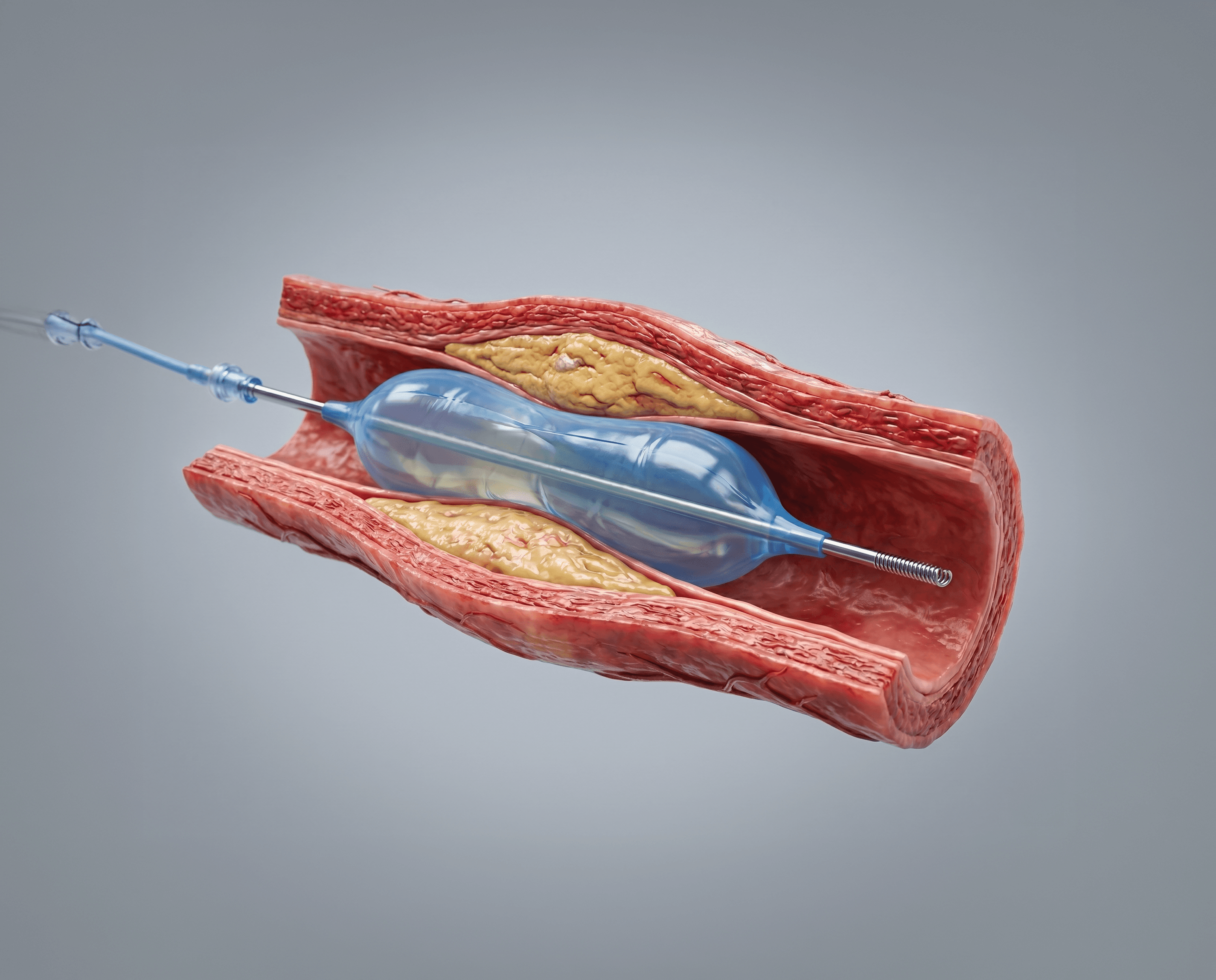
Through a small needle puncture, a fine wire and balloon are guided under X-ray imaging to open a narrowed artery in the leg. In some cases, a small metal mesh tube called a stent is placed to help keep the artery open.
Peripheral arterial disease (PAD) is a common condition in which arteries supplying the legs become narrowed, most often due to atherosclerosis.
The most common symptom is intermittent claudication — pain or cramping in the calf, thigh, or buttock that develops during walking and improves with rest.
Many people with intermittent claudication have a stable course when appropriate medical treatment and lifestyle measures are in place. However, PAD is also recognised as an important marker of cardiovascular risk and is taken seriously within NICE guidance for this reason.[1]
Who may be suitable?
Peripheral arterial disease is typically managed by vascular specialists working alongside GPs and, where appropriate, interventional radiologists.
NICE guidance (CG147) recommends that, before angioplasty is considered, cardiovascular risk factors should be addressed wherever possible. This usually includes:
Smoking cessation support
Blood pressure management
Cholesterol management
Diabetes management
Medication such as antiplatelets and statins where appropriate
A supervised exercise programme is also recommended where suitable and available. This typically involves around two hours of supervised exercise per week over a three-month period.[2]
Angioplasty may then be considered where:
Symptoms remain significantly limiting despite conservative treatment
Supervised exercise is not suitable or available
Imaging demonstrates a pattern of arterial narrowing appropriate for angioplasty[3]
Assessment typically includes duplex ultrasound and either CT angiography or MR angiography to map the arteries in detail.
A multidisciplinary decision
At Pinhole Clinic™, the decision about whether peripheral angioplasty is an appropriate treatment option is made jointly between Dr El Farargy and the vascular team involved in your care.
Interventional radiology is a recognised consultant-led subspecialty within Clinical Radiology, with dedicated training, examinations, and standards of practice.
The multidisciplinary discussion brings together complementary expertise, including imaging interpretation, procedural feasibility and risk, and the wider vascular clinical context. The aim is to ensure that any treatment plan agreed is supported by the patient, the interventional radiologist, and the vascular team.
Where a patient has not yet been assessed by a vascular specialist, this can be arranged as part of the clinical pathway.
What the procedure involves
Peripheral angioplasty is usually performed under local anaesthetic through a small needle puncture.
A fine catheter is guided under X-ray imaging to the narrowed section of artery. A balloon is then inflated to widen the vessel, and in some cases a stent is placed to help maintain blood flow.
Most patients are discharged either the same day or the following day.
Recovery and follow-up
Most patients return home on the same day or the day after treatment.
Some bruising or discomfort at the puncture site is common during the first few days and usually settles quickly.
A return to light activity within a few days and normal activity within approximately two weeks is typical, although recovery times vary between individuals.
Follow-up is arranged jointly with the vascular team.
Long-term outcomes depend on several factors, including ongoing cardiovascular risk-factor management, which remains an essential part of treatment whether or not angioplasty is performed.
Risks and what we discuss at consultation
As with any medical procedure, peripheral angioplasty carries potential risks and complications.
These can include:
Bleeding or bruising at the puncture site
Damage to the artery wall
Dislodgement of plaque affecting blood flow further down the leg
Contrast reaction, which may be more relevant in patients with impaired kidney function
Re-narrowing of the artery over time, sometimes requiring additional treatment
Less commonly, complications may require further procedures, including emergency vascular surgery.
The risks, benefits, and alternative treatment options relevant to your situation are discussed in detail during consultation, taking your individual circumstances into account.
How to be assessed
Pinhole Clinic™ accepts referrals from vascular surgeons, GPs, and other healthcare professionals. Patients are also welcome to request a consultation directly.
Because decisions regarding peripheral angioplasty depend on diagnosis, imaging findings, symptoms, and the wider clinical picture, assessment is made jointly between Dr El Farargy and the relevant specialty team.
If you have not yet been assessed by a specialist in the appropriate field, we can help arrange this as part of the multidisciplinary pathway. This may be required for clinical assessment and, where applicable, for insurance authorisation.
Whether you contact the clinic directly or are referred by another healthcare professional, the aim is the same: to determine together whether a minimally invasive treatment approach is appropriate for you.
References
NICE. Lower limb peripheral arterial disease — guideline overview (CG147).
https://www.nice.org.uk/guidance/cg147NICE CG147. Recommendations: management of intermittent claudication.
https://www.nice.org.uk/guidance/cg147/chapter/recommendations#management-of-intermittent-claudicationNICE QS52. Quality statement 5: Angioplasty for intermittent claudication.
https://www.nice.org.uk/guidance/qs52/chapter/Quality-statement-5-Angioplasty-for-intermittent-claudication

Dr. Marawan Elfarargy
The information on this page is provided for general educational purposes. It is not personalised medical advice and should not be used to make decisions about your treatment.
Suitability for any minimally invasive procedure depends on individual clinical assessment, including diagnosis, imaging, and a discussion of the full range of treatment options with the appropriate clinical team. All procedures carry risks. Individual outcomes vary depending on diagnosis, anatomy, and overall health.
The risks, benefits, and alternatives relevant to your situation will be discussed with you at consultation, and you will have the opportunity to ask questions before any decision about treatment.
