Varicocele Embolisation
For dull testicular ache, swelling from a varicocele: a pinhole option under local anaesthetic with no incision in the scrotum.
Is this you?
The information on this page may be relevant if any of the following describe your situation:
• A dragging or heavy feeling in the scrotum, often worse at the end of the day.
• Discomfort or aching that improves when lying down.
• A swelling in the scrotum described as a “bag of worms.”
• You are exploring options after being told you may have a varicocele.
• You are considering surgical and non-surgical treatment options.
• You are looking into whether a minimally invasive day-case procedure may be appropriate.
What is varicocele embolisation?
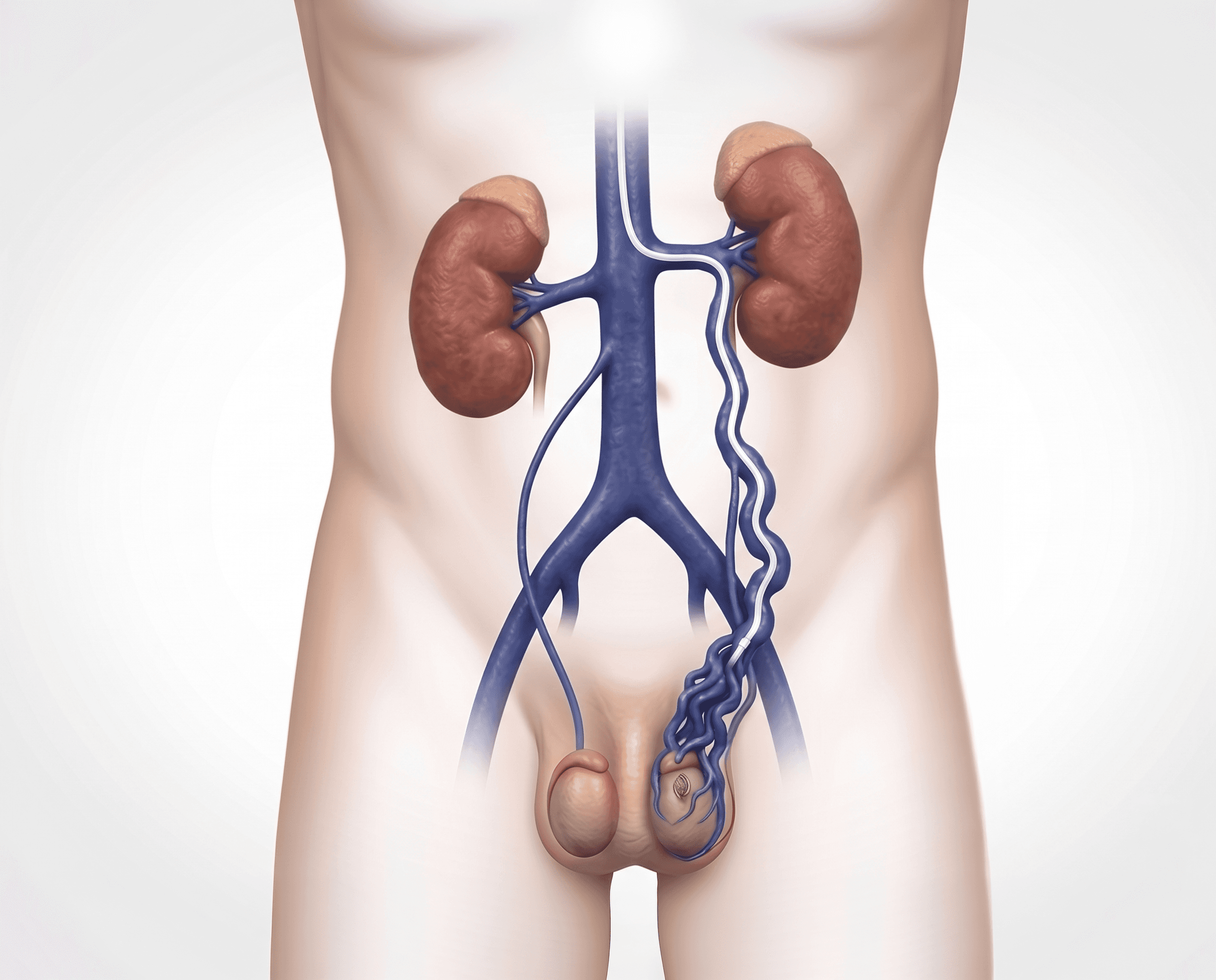
A varicocele is an enlargement of the veins that drain the testicle, similar in nature to varicose veins in the legs. Many varicoceles cause no symptoms and do not require treatment.
When treatment is appropriate, it is usually due to symptoms such as discomfort, a heavy or dragging sensation, or pain affecting daily life.
Varicocele embolisation is performed by an interventional radiologist, usually under local anaesthetic, through a small needle puncture in the neck or groin. Using X-ray guidance, small coils — sometimes combined with a liquid embolic agent — are placed in the affected vein. This redirects blood flow through normal veins.
Who may be suitable?
Treatment options for symptomatic varicocele include both surgical repair and embolisation. Both are established approaches with recognised evidence bases.
The most appropriate option depends on:
• The pattern of the varicocele on imaging
• The severity and nature of symptoms
• The patient’s overall clinical situation
• A shared decision with the urology team
A multidisciplinary decision
At Pinhole Clinic™, the decision about whether varicocele embolisation is appropriate is made jointly between Dr El Farargy and the urology team involved in your care.
Interventional radiology is a consultant-led subspecialty within Clinical Radiology, with dedicated training, examinations, and standards of practice.
The multidisciplinary discussion brings together complementary expertise, including imaging interpretation, procedural suitability, and the wider urological context. Findings are shared with the referring team so that any agreed plan is supported by the patient, the interventional radiologist, and the urology team.
Where a patient has not yet been assessed by a urologist, this is arranged as part of the pathway.
What the procedure involves
The procedure is performed under local anaesthetic, usually through a small puncture in the neck or groin.
A fine catheter is guided under X-ray imaging to the affected vein. Small coils — sometimes combined with a liquid embolic agent — are then used to block the vein and redirect blood flow.
Most patients are discharged the same day.
Recovery and follow-up
Mild bruising or discomfort at the puncture site is common in the first few days.
Most patients return to light activity within a few days and to work within 1–2 days, depending on the nature of their job.
Strenuous exercise, heavy lifting, and cycling are usually avoided for around one week.
Where symptoms were present before treatment, improvement is often gradual over the following weeks to months. Individual response varies.
Risks and what we discuss at consultation
As with any medical procedure, varicocele embolisation carries potential risks.
These may include:
• Bruising at the puncture site
• Recurrence of the varicocele over time
• Rare procedural complications
The risks, benefits, and alternatives relevant to your situation are discussed in detail during consultation.
How to be assessed
Pinhole Clinic™ accepts referrals from urologists, GPs, and other healthcare professionals. Patients may also request a consultation directly.
Because treatment decisions depend on symptoms, imaging, and overall clinical context, assessment is made jointly between Dr El Farargy and the relevant urology team.
If you have not yet been assessed by a urologist, we can help arrange this as part of the multidisciplinary pathway. This may be required for clinical assessment and, where applicable, insurance approval.
Whether you are referred or self-refer, the aim is the same: to determine whether a minimally invasive approach is appropriate.
References
Liu Q, et al. Comparing Endovascular and Surgical Treatments for Varicocele: A Systematic Review and Meta-Analysis. Journal of Vascular and Interventional Radiology, 2022.
https://pubmed.ncbi.nlm.nih.gov/35314371/

Dr. Marawan Elfarargy
The information on this page is provided for general educational purposes. It is not personalised medical advice and should not be used to make decisions about your treatment.
Suitability for any minimally invasive procedure depends on individual clinical assessment, including diagnosis, imaging, and a discussion of the full range of treatment options with the appropriate clinical team. All procedures carry risks. Individual outcomes vary depending on diagnosis, anatomy, and overall health.
The risks, benefits, and alternatives relevant to your situation will be discussed with you at consultation, and you will have the opportunity to ask questions before any decision about treatment.
